
The Imperial County Multi-Day Arrest Log
The Imperial County Sheriff posts no 72-hour, seven-day, or weekly arrest log online. That door stays shut. The ICSO custody manual does describe a daily log. It tracks current custody and recent bookings inside the jail. Nothing searchable appears on the public site, and no archive sits behind it. Retention depth stays unknown.
The records still exist, though scattered. A city police department may keep the incident report, while the Sheriff holds the county booking summary. Imperial Superior Court, in time, keeps the case trail.
The new Imperial County Sheriff site is an official starting point.
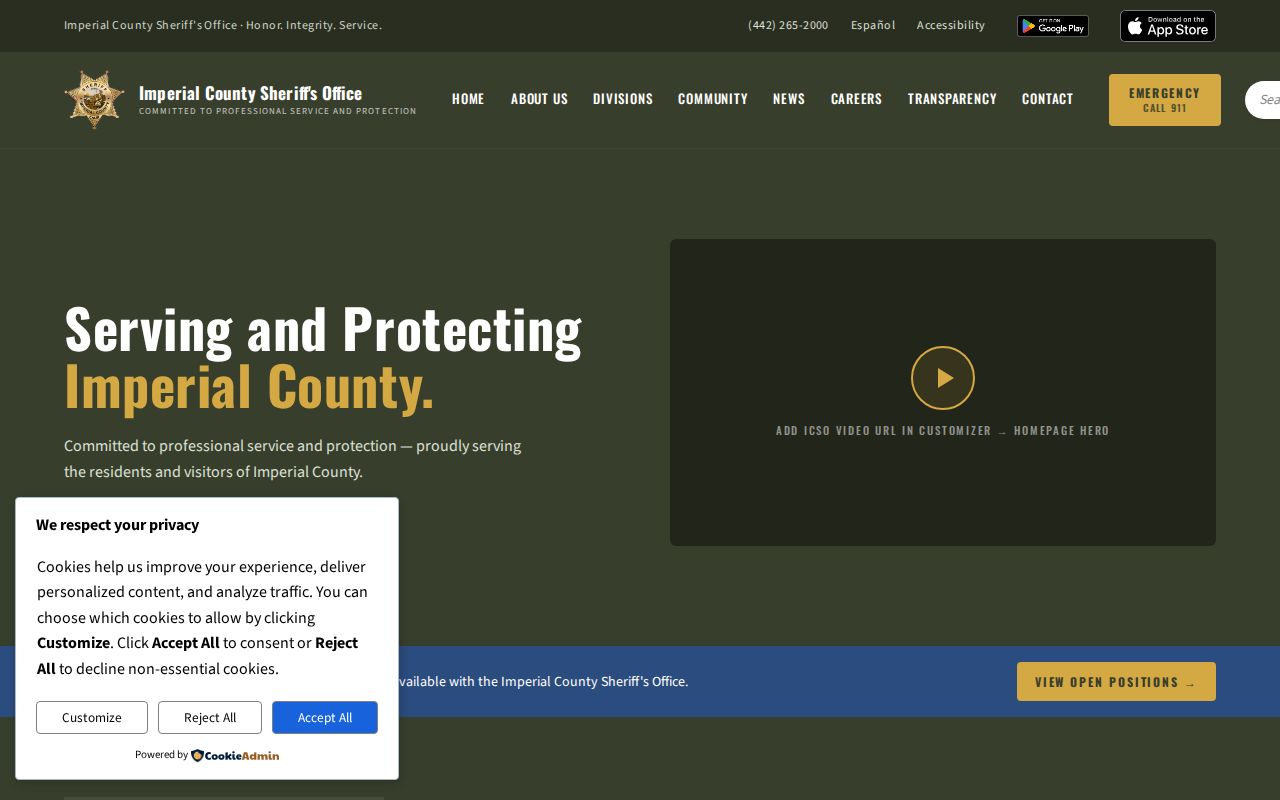
The Imperial County Sheriff's Office names itself plainly. It posts no multi-day arrest table. No weekly booking grid appears on its site. Visitors need another route for a county arrest log.
How to Reconstruct the Imperial County Blotter
Start with official records, not stories. Then layer news reporting on top as a discovery tool. Note the source and the date beside every fact you copy. An article's publication date is not the arrest date.
- Set a date range. Include the weekend or holiday before the period of interest, since a later brief may describe an earlier arrest.
- Identify the arresting agency. Search the relevant El Centro, Calexico, Brawley, or Sheriff channel. Municipal reports and county jail bookings are separate records.
- Check county custody. Call ICSO jail information at (442) 265-2266 when present custody matters. For only today’s intake question, use the Imperial County 24 hour arrests guide.
- Compare local coverage. Search reputable archives by full name, city, agency, and approximate date. Treat headlines and images as editorial material, not the official log.
- Request the older record. Ask ICSO Records or the responsible city Records Unit for the booking summary, incident report, or log entry. Be precise about which document is sought.
- Follow the case separately. Use a case number with the Imperial Superior Court ROA lookup when available. The court record may later change the meaning of booked charges.
Slower, yes. Even so, this approach keeps an unofficial index from posing as the Sheriff's blotter. Every record comes straight from an Imperial County custodian. That alone makes the extra steps worth it.
What an Imperial County Log Record May Show
The custody manual describes the daily-log record at the field level. It does not describe a public website. Some fields can be withheld. Privacy, safety, investigative, juvenile, sex-crime, and criminal-history rules all permit redaction.
| Record element | Why it matters in a multi-day review |
|---|---|
| Full name and identifying details | Helps separate people with similar names; restrictions may apply. |
| Arrest date, time, and location | Places the underlying event in the chronology. |
| Booking date and time | Shows when jail processing occurred, which may be later. |
| Arresting agency | Points to the office holding the incident or log record. |
| Charges, holds, and warrants | States custody bases or charges at that point, subject to change. |
| Bail and court dates | Supplies early process information, not a final outcome. |
| Release or current location | Explains whether a person left, moved, or remained in custody when updated. |
Imperial County lists no public rule for booking-photo display. An image may exist inside the jail system yet stay out of the public record. The fee schedule lists booking-photo requests separately. News outlets often run agency, courtesy, Google, or stock images instead.
Weekend Arrests and Delayed Reports
ICSO publishes no weekend batch time and no holiday update schedule. Friday-through-Sunday arrests do not reliably appear Monday morning. A "surge" is guesswork, not a measured county pattern. Widen the date range instead, and separate event timing from release timing.
One weekend incident can leave a trail of dates. The city report, the ICSO booking, a VINE status change, and a news brief may each carry a different day. Holidays add friction too. ICSO Records keeps weekday hours and closes on weekends and holidays. For current custody questions, call jail information first.
Imperial County Archives and Retention Limits
Imperial County publishes no archive depth or roll-off date. The current ICSO records schedule offers no simple retention rule for booking summaries or photos. Older policy papers should not become today's promise. How long an arrest record survives is a question for the office itself.
Ask the office that created the record. ICSO Records sits at 328 Applestill Road, El Centro, CA 92243. Mail goes to P.O. Box 1040, El Centro, CA 92244. The office lists (442) 265-2125 and recordsdivision@icso.org. Walk-in hours run 8:00 a.m. to 4:30 p.m. on weekdays. A current fee schedule prices a booking summary at $25. Confirm availability and cost for your exact request before paying.
Records no longer kept locally may sit elsewhere. California State Archives guides and county transfer details can point to a repository, though they never replace a direct question to ICSO, and court case files follow separate access rules.
Local News Is a Secondary Arrest Timeline
Local news fills the gap in Imperial County. KYMA maintains Imperial County and crime archives, and Calexico Chronicle runs public-safety stories with periodic police and sheriff briefs. Imperial Valley Insight keeps a Crime Reports & Updates category. Imperial Valley Press offers a NewsBank archive. The KYMA Imperial County archive shows the story-based format.
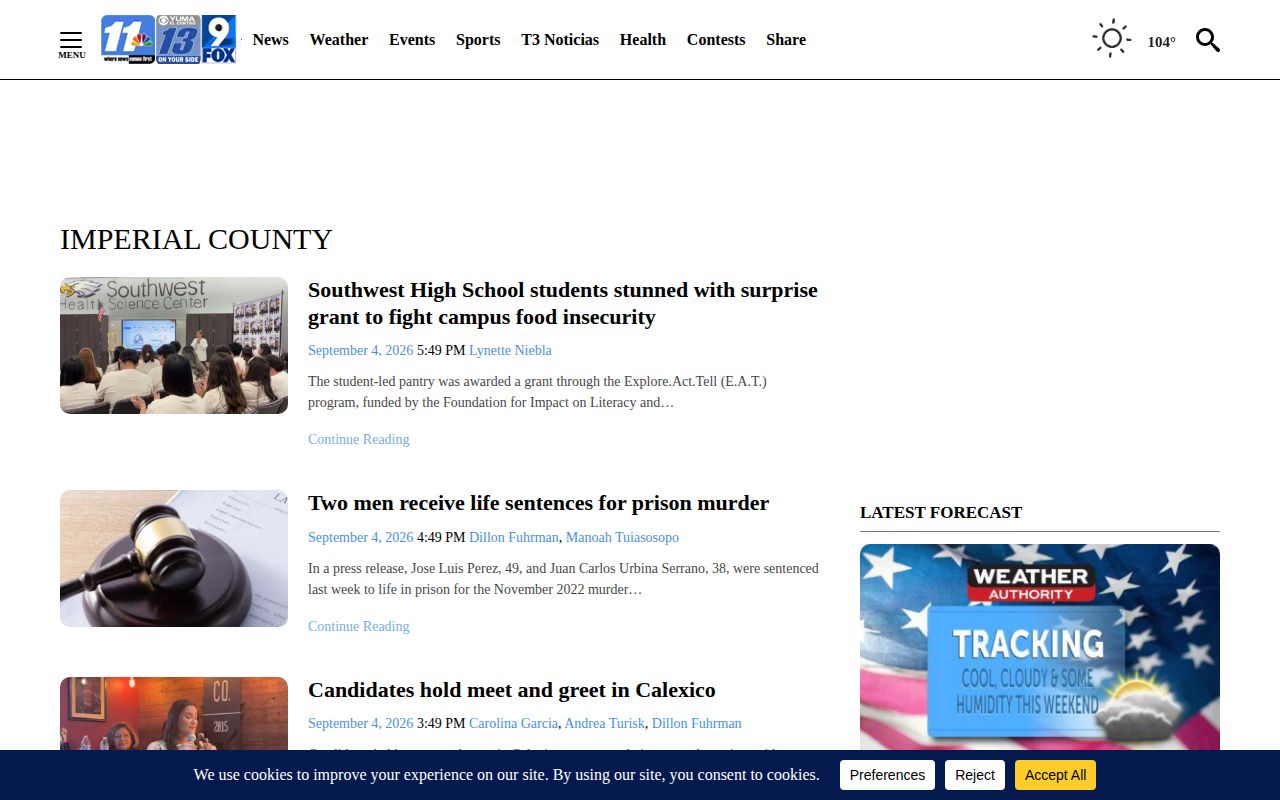
An archive reveals dates and agency references. Editorial choice shapes what gets covered. So it never works as a complete arrest register. The Imperial Valley Insight crime reports page offers another local chronology with the same limits.
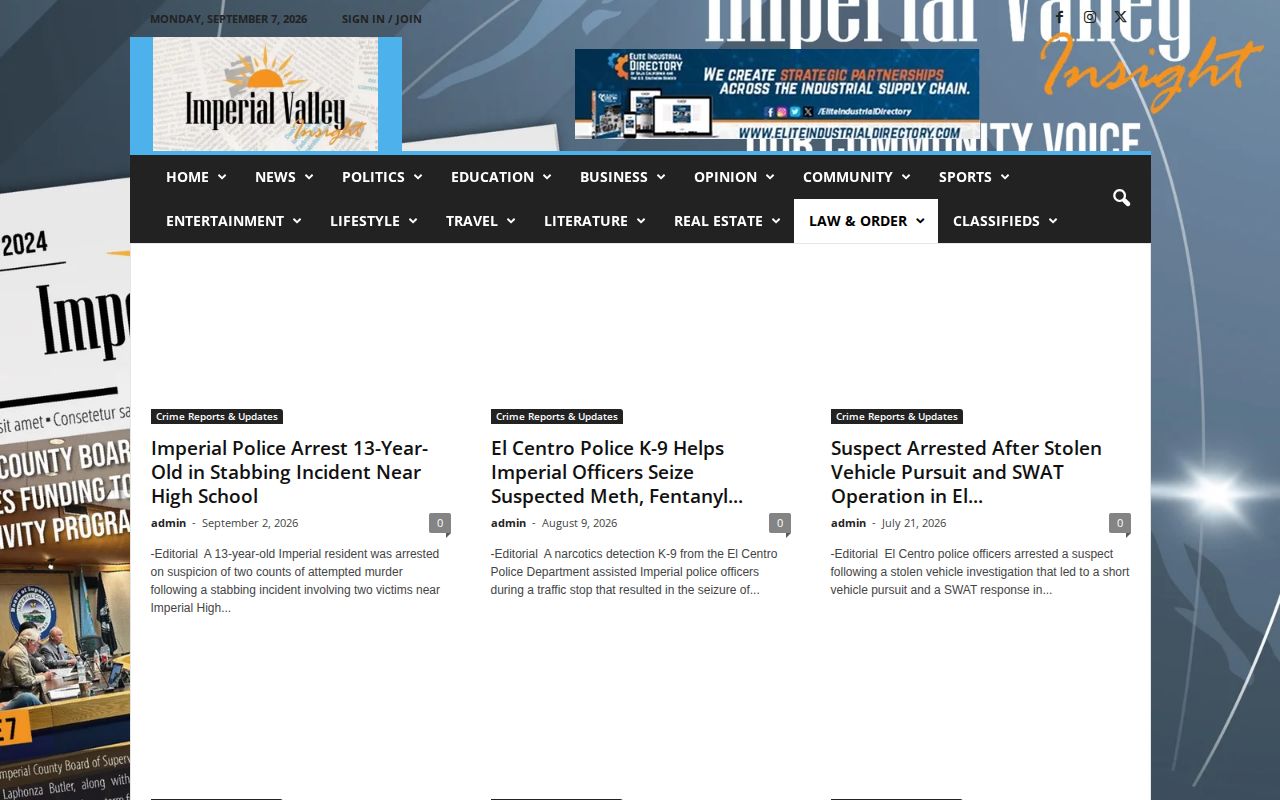
News coverage adds incident context. It cannot close the file. Names, photographs, charges, and outcomes still need confirmation from the agency or court that holds the record. For Imperial County arrests, that final check always belongs to the source.
City Logs, County Bookings, and Court Files
Imperial County's three biggest cities keep no recurring multi-day booking feeds. El Centro does offer report and log-entry access. Both are free through Police Records. Calexico routes officer report requests through its Records Unit. Brawley accepts them as well, though two official forms list different fees. Confirm the current amount first. A city arrest and an ICSO booking sit with separate custodians. The city file may cover the stop, probable cause, and location. The jail record tracks holds, bail, facility, and release. Imperial Superior Court splits its tools: the public ROA lookup runs on case numbers, while the named-record search needs an account and a fee. News reports can point you toward the right agency, but they cannot replace these official channels.
State Arrest Statistics Are Not the County Log
State numbers answer a different question. California DOJ OpenJustice and the Criminal Justice Statistics Center track reported arrests across agencies. That helps with historical trends. Yet they cannot tell you who entered the Imperial County jail this week. There is no live county booking population hiding in those tables. One more wrinkle: a single person can rack up several arrests, so a raw total is never a headcount of unique people. Imperial County has an extra reason for caution. The state's 2023 context report flags incomplete reporting by local agencies, with gaps for Brawley, Calipatria, Imperial, and Westmorland. A chart stays useful for the period it covers. What it cannot do is replace a missing Sheriff blotter or rule out events that never got reported at all.
Arrest Log Allegations Require Context
A blotter entry is a snapshot from an early stage. Much can change afterward. After filing and judicial review, charges may be amended, rejected, dismissed, or resolved in some other way than first listed. The entry still tells you an arrest happened. It also tells you when.
Older entries deserve extra care when you repeat them. Keep the original date attached. Then check with the originating agency and the court for anything newer. That habit matters most with news archives, which linger online long after a custody status has changed.